
All Episodes of Making Sense of the Sixties
Browse all episodes of Making Sense of the Sixties
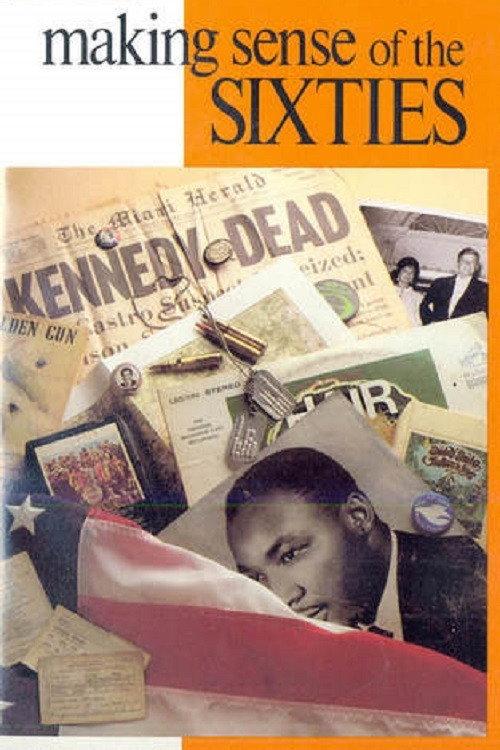
A look back at one of the most turbulent decades of America's recent history, this documentary examines the political and cultural changes, from the assassinations of JFK, RFK and MLK to the rapidly escalating war
Season 1
 N/A/100 votes
Seeds of the Sixties
Season 1 Episode 1 - Aired 1/21/1991
The first one, "Seeds of the Sixties," examines the postwar period, especially the 1950s. It adopts the traditional interpretation that the era was bent on consensus and conformity, the result of the anti-communist crusade at home and abroad, and it investigates two different groups that would have an impact on the 1960s—white northern kids usually growing up in the suburbs and southern blacks. The program contains interesting footage of babyboomers in schools learning nationalism and patriotism, and at home learning respect for authority. By the late 1950s, of course, a few blacks and some white teenagers became restless, and the show listens to participants describe the aspects of the 1950s that lead them to become activists in the next decade. Eventually, the program demonstrates that babyboomers grew up in circumstances considerably different than their parents, and that postwar society planted the seeds of rebellion.
Director: Unknown
Writer: Unknown
- N/A/100 votes
We Can Change the World
Season 1 Episode 2 - Aired 1/28/1991
The second show investigates the early 1960s and the idea that, as President Kennedy said, "The torch has been passed." A new generation was beginning to dominate the American scene, and the program examines the sixties generation and makes sense of their involvement in the civil rights struggle, rise of the new left, and early campus demonstrations. Furthermore, the show attempts to define this young mass of kids going to college in the first years of the 1960s, their hope and idealism demonstrated during the struggle, their disillusionment with the assassination of John Kennedy, and how their commitment during Freedom Summer 1964 was translated into activism in subsequent years at numerous university campuses.
Director: Unknown
Writer: Unknown
- N/A/100 votes
Breaking Boundaries, Testing Limits
Season 1 Episode 3 - Aired 2/4/1991
The producers in the third show shift to the most controversial topic, the counterculture. Just the idea of making sense of that phenomenon is difficult, for as Abbie Hoffman supposedly said, "If you can remember the 1960s, you weren't there." Also, a generation later in "just say no" America, presenting the reasons for "getting stoned" is fraught with peril. Fortunately, "Breaking Boundaries, Testing Limits," attempts to explain the reasons for the revolt against mainstream culture, its forms and symbols, its growth and excesses, without heavy editorializing.
Director: Unknown
Writer: Unknown
- N/A/100 votes
In A Dark Time
Season 1 Episode 4 - Aired 2/11/1991
In the next show, "In A Dark Time," the producers return to the "reality" of the 1965 to 1968 era of city riots, black power, campus confrontations, and the Vietnam War. The show's theme is the decline of idealism, rise of frustration, and the subsequent "fire in the streets" violence that symbolizes this decade for most Americans. The show ends in 1968 with the nation beleaguered and divided: you're either left or right, part of the solution or part of the problem. Ultimately, this program makes sense of the election of "law and order" candidate, Richard M. Nixon.
Director: Unknown
Writer: Unknown
- N/A/100 votes
Coming to a Peace...with Ourselves
Season 1 Episode 5 - Aired 2/18/1991
The Nixon Administration is the time frame for the fifth and final chronological program. The show explores pro- and antiwar activity after the Cambodian invasion and Kent State, and the rise of the silent majority—"Love It or Leave It." The program shifts to new forms of social activism in the early 1970s such as ecology, brown and red power, and the rise of many grassroots organizations that demonstrated empowerment—everyone had a cause. Some scenes from women's liberation encounter groups are engrossing, and the cut from the movie Diary of a Mad Housewife should justify feminism to any critic.
Director: Unknown
Writer: Unknown
- N/A/100 votes
Final Episode
Season 1 Episode 6 - Aired 2/25/1991
In the final show the producers attempt to analyze the era by recounting the themes and relying on flashbacks and on interviews with participants and experts. They try to place the decade in perspective, and to answer: What is the legacy of the sixties?
Director: Unknown
Writer: Unknown