TalkDocumentaryPBS Digital Studios

The Best Episodes of Crash Course: World History Season 1

Every episode of Crash Course: World History Season 1 ranked from best to worst. Discover the Best Episodes of Crash Course: World History Season 1!

Binge this in 3h 34m·Peaking at 7.9/10

Seasons2

Episode Rankings

  1. #1 Fan Favorite
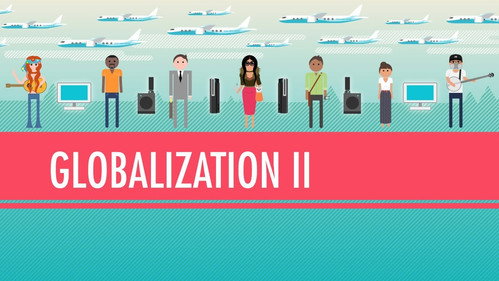
    Crash Course: World History Season 1 Episode 42 - Globalization II - Good or Bad?: Crash Course World History #42
    8.0/10(12 votes)
    S1:E42

    John asks whether globalization is a net positive for humanity. While the new global economy has created a lot of wealth and lifted a lot of people out of poverty, it also has some effects that aren't so hot. Wealth disparity, rising divorce rates, environmental damage, and new paths for the spread of disease. So does all this outweigh the economic benefits, the innovation, and the relative peace that come with interconnected economies? As usual, the answer is not simple. In this case, we're living in the middle of the events we're discussing, so it's hard to know how it's going to turn out.

    Director:Unknown
    Writer:Unknown

    Be the first to start the conversation for this episode

  2. Crash Course: World History Season 1 Episode 1 - The Agricultural Revolution: Crash Course World History #1
    7.9/10(20 votes)
    S1:E1

    John Green investigates the dawn of human civilization. John looks into how people gave up hunting and gathering to become agriculturalists, and how that change has influenced the world we live in today. Also, there are some jokes about cheeseburgers.

    Director:Unknown
    Writer:Unknown

    Be the first to start the conversation for this episode
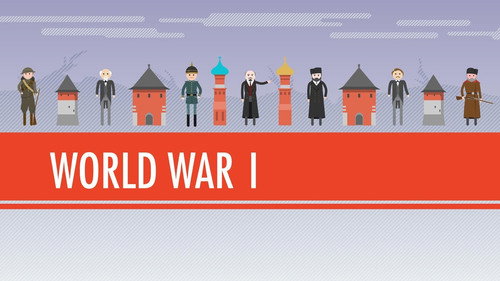
  3. Crash Course: World History Season 1 Episode 36 - Archdukes, Cynicism, and World War I: Crash Course World History #36
    7.9/10(11 votes)
    S1:E36

    John Green teaches you about the war that was supposed to end all wars. Instead, it solved nothing and set the stage for the world to be back at war just a couple of decades later. As an added bonus, World War I changed the way people look at the world, and normalized cynicism and irony. John will teach you how the assassination of an Austrian Archduke kicked off a new kind of war that involved more nations and more people than any war that came before. New technology like machine guns, airplanes, tanks, and poison gas made killing more efficient than ever. Trench warfare and modern weapons led to battles in which tens of thousands of soldiers were killed in a day, with no ground gained for either side. World War I washed away the last vestiges of 19th-century Romanticism and paved the way for the 20th-century modernism that we all know and find to be cold and off-putting.

    Director:Unknown
    Writer:Unknown

    Be the first to start the conversation for this episode

  4. Crash Course: World History Season 1 Episode 41 - Globalization I - The Upside: Crash Course World History #41
    7.9/10(12 votes)
    S1:E41

    John Green teaches you about globalization, a subject so epic, so, um, global, it requires two videos. In this video, John follows the surprisingly complex path of a t-shirt as it crisscrosses the world before coming to rest on your doorstep, and eventually in your dresser. The story of the t-shirt and its manufacture in far-flung places like China, Guatemala, and India is a microcosm of what's going on in the global economy. Globalization is a bit of a mixed bag, and there have definitely been winners and losers along the way. In this episode, John will talk about some of the benefits that have come along with it. Next week, he'll get into some of the less-positive side effects of globalization.

    Director:Unknown
    Writer:Unknown

    Be the first to start the conversation for this episode
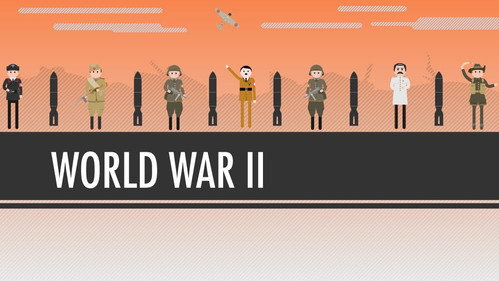
  5. Crash Course: World History Season 1 Episode 38 - World War II: Crash Course World History #38
    7.8/10(11 votes)
    S1:E38

    John Green teaches you about World War II, aka The Great Patriotic War, aka The Big One. So how did this war happen? And what does it mean? We've all learned the facts about World War II many times over, thanks to repeated classroom coverage, the History channel, and your grandfather (or maybe great-grandfather) showing you that Nazi bayonet he used to keep in his sock drawer and telling you a bunch of age-inappropriate stories about his harrowing war experiences. So, why did the Axis powers think forceful expansion was a good idea? (they were hungry). So why did this thing shake out in favor of the Allies? Hint: it has to do with the fact that it was a world war. Germany and Japan made some pretty serious strategic errors, such as invading Russia and attacking the United States, and those errors meant that pretty much the whole world was against them.

    Director:Unknown
    Writer:Unknown

    Be the first to start the conversation for this episode
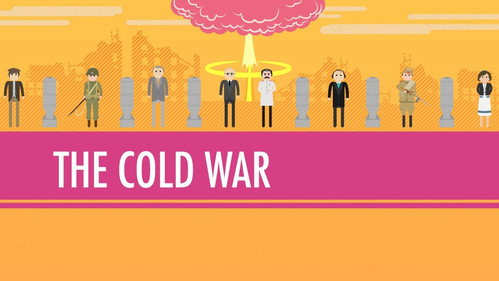
  6. Crash Course: World History Season 1 Episode 39 - USA vs USSR Fight! The Cold War: Crash Course World History #39
    7.8/10(11 votes)
    S1:E39

    John Green teaches you about the Cold War, which was occasionally hot, but on average, it was just cool. In the sense of its temperature. It was by no means cool, man. After World War II, there were basically two big geopolitical powers left to divide up the world. And divide they did. The United States and the Soviet Union divvied up Europe in the aftermath of the war and then proceeded to spend the next 45 years fighting over the rest of the world. It was a great ideological struggle, with the US on the side of capitalism and profit, and the USSR pushing Communism, so-called. While both sides presented themselves as the good guy in this situation, the COLD reality is that there are no good guys. Both parties to the Cold War engaged in forcible regime changes, built up vast nuclear arsenals, and basically got up to dirty tricks.

    Director:Unknown
    Writer:Unknown

    Be the first to start the conversation for this episode
  7. Trending NowTRENDING NOW

    The 20 BEST Episodes of Crash Course: World History

    READ
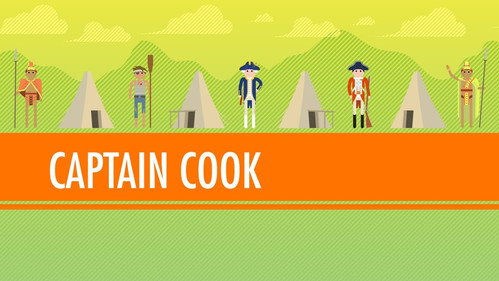
  8. Crash Course: World History Season 1 Episode 27 - The Amazing Life and Strange Death of Captain Cook: Crash Course World History #27
    7.7/10(14 votes)
    S1:E27

    John Green teaches you about the life and death of one of history's great explorers, Captain James Cook of the British Navy. He charted large swaths of the Pacific ocean, laid claim to Australia and New Zealand, and died a bizarre death in the Sandwich Islands, which are now called the Hawaiian Islands. Exactly how and why Captain Cook was killed in Hawaii is a long-running historical debate. John presents two interpretations of the event and talks about what the differing interpretations say about history. It turns out how the story is told depends on who is doing the storytelling, and people from different backgrounds can interpret events in very different ways. Also, there is a celebration and a mustache involved in this episode, so you definitely don't want to miss it.

    Director:Unknown
    Writer:Unknown

    Be the first to start the conversation for this episode
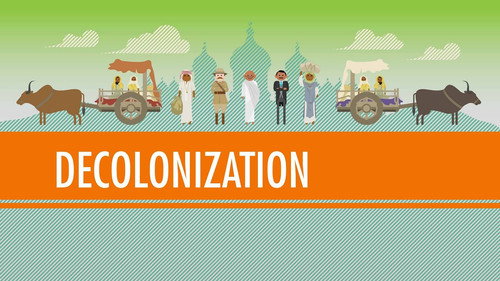
  9. Crash Course: World History Season 1 Episode 40 - Decolonization and Nationalism Triumphant: Crash Course World History #40
    7.6/10(11 votes)
    S1:E40

    John Green teaches you about the post-World War II breakup of most of the European empires. As you'll remember from previous installments of Crash Course, Europeans spent several centuries sailing around the world creating empires, despite the fact that most of the places they conquered were perfectly happy to carry on alone. After World War II, most of these empires collapsed. This is the story of those collapses. In most places, the end of empire was not orderly, and violence often ensued. While India was a (sort of) shining example of non-violent change, in places like The Congo, Egypt, Rwanda, Vietnam, Cambodia, and Laos, things didn't go smoothly at all. John brings you all this, plus pictures of Sea Monkeys. Sadly, they don't look anything like those awesome commercials in the comic books.

    Director:Unknown
    Writer:Unknown

    Be the first to start the conversation for this episode
  10. Crash Course: World History Season 1 Episode 32 - Coal, Steam, and The Industrial Revolution: Crash Course World History #32
    7.5/10(11 votes)
    S1:E32

    John Green wraps up revolutions month with what is arguably the most revolutionary of modern revolutions, the Industrial Revolution. While very few leaders were beheaded in the course of this one, it changed the lives of more people more dramatically than any of the political revolutions we've discussed. So, why did the Industrial Revolution happen around 1750 in the United Kingdom? Coal. Easily accessible coal, it turns out. All this, plus you'll finally learn the difference between James Watt and Thomas Newcomen, and will never again be caught telling people that your blender has a 900 Newcomen motor.

    Director:Unknown
    Writer:Unknown

    Be the first to start the conversation for this episode

  11. Crash Course: World History Season 1 Episode 16 - Mansa Musa and Islam in Africa: Crash Course World History #16
    7.4/10(12 votes)
    S1:E16

    John Green teaches you about Sub-Saharan Africa! So, what exactly was going on there? It turns out, it was a lot of trade, converting to Islam, visits from Ibn Battuta, trade, beautiful women, trade, some impressive architecture, and several empires. John not only covers the West African Malian Empire, which is the one Mansa Musa ruled, but he also discusses the Ghanian Empire and even gets over to East Africa as well to discuss the trade-based city-states of Mogadishu, Mombasa, and Zanzibar. In addition to all this, John considers emigrating to Canada.

    Director:Unknown
    Writer:Unknown

    Be the first to start the conversation for this episode

  12. Crash Course: World History Season 1 Episode 24 - The Atlantic Slave Trade: Crash Course World History #24
    7.4/10(12 votes)
    S1:E24

    John Green teaches you about one of the least funny subjects in history: slavery. John investigates when and where slavery originated, how it changed over the centuries, and how Europeans and colonists in the Americas arrived at the idea that people could own other people based on skin color. Slavery has existed as long as humans have had civilization, but the Atlantic Slave Trade was the height, or depth, of dehumanizing, brutal, chattel slavery. American slavery ended less than 150 years ago. In some parts of the world, it is still going on. So how do we reconcile that with modern life? In a desperate attempt at comic relief, Boba Fett makes an appearance.

    Director:Unknown
    Writer:Unknown

    Be the first to start the conversation for this episode

  13. Crash Course: World History Season 1 Episode 2 - Indus Valley Civilization: Crash Course World History #2
    7.3/10(23 votes)
    S1:E2

    John Green teaches you about the Indus Valley Civilization, one of the largest of the ancient civilizations. John teaches you the who, how, when, where, and why of the Indus Valley Civilization, and dispenses advice on how to be more successful in your romantic relationships.

    Director:Unknown
    Writer:Unknown

    Be the first to start the conversation for this episode

  14. Crash Course: World History Season 1 Episode 21 - Columbus, Vasco da Gama, and Zheng He - 15th Century Mariners: Crash Course World History #21
    7.3/10(12 votes)
    S1:E21

    John Green teaches you about the beginning of the so-called Age of Discovery. You've probably heard of Christopher Columbus, who "discovered" America in 1492, but what about Vasco da Gama? How about Zheng He? Columbus gets a bad rap from many modern historians, but it turns out he was pretty important as far as the history of the world goes. That said, he wasn't the only pioneer plying the seas in the 1400s. In Portugal, Vasco da Gama was busy integrating Europe into the Indian Ocean Trade by sailing around Africa. Chinese admiral Zheng He was also traveling far and wide in the largest wooden ships ever built. Columbus, whether portrayed as a hero or a villain, is usually credited as the great sailor of the 15th century, but he definitely wasn't the only contender. What better way to settle this question than with a knock-down, drag-out, no holds barred, old-fashioned battle royal? We were going to make it a cage match, but welding is EXPENSIVE.

    Director:Unknown
    Writer:Unknown

    Be the first to start the conversation for this episode

  15. Crash Course: World History Season 1 Episode 22 - The Renaissance: Was it a Thing? - Crash Course World History #22
    7.3/10(13 votes)
    S1:E22

    John Green teaches you about the European Renaissance. European learning changed the world in the 15th and 16th centuries, but was it a cultural revolution, or an evolution? We'd argue that any cultural shift that occurs over a couple of hundred years isn't too overwhelming to the people who live through it. In retrospect though, the cultural bloom in Europe during this time was pretty impressive. In addition to investigating what caused the Renaissance and who benefitted from the changes that occurred, John will tell you just how the Ninja Turtles got mixed up in all this.

    Director:Unknown
    Writer:Unknown

    Be the first to start the conversation for this episode

  16. Crash Course: World History Season 1 Episode 25 - The Spanish Empire, Silver, & Runaway Inflation: Crash Course World History #25
    7.3/10(12 votes)
    S1:E25

    John Green explores how Spain went from being a middling European power to one of the most powerful empires on Earth, thanks to their plunder of the New World in the 16th and 17th centuries. Learn how Spain managed to destroy the two biggest pre-Columbian civilizations, mine a mountain made of silver, mishandle their economy, and lose it all by the mid-1700s. Come along for the roller coaster ride with Charles I (he was also Charles V), Philip II, Atahualpa, Moctezuma, Hernán Cortés, and Francisco Pizarro as Spain rises and falls, and takes two empires and China down with them.

    Director:Unknown
    Writer:Unknown

    Be the first to start the conversation for this episode

  17. Crash Course: World History Season 1 Episode 4 - Ancient Egypt: Crash Course World History #4
    7.2/10(21 votes)
    S1:E4

    John covers the long, long history of ancient Egypt, including the Old, Middle, and New Kingdoms, and even a couple of intermediate periods. Learn about mummies, pharaohs, pyramids, and the Nile with John Green.

    Director:Unknown
    Writer:Unknown

    Be the first to start the conversation for this episode

  18. Crash Course: World History Season 1 Episode 5 - The Persians & Greeks: Crash Course World History #5
    7.2/10(19 votes)
    S1:E5

    John compares and contrasts Greek civilization and the Persian Empire. Of course, we're glad that Greek civilization spawned modern western civilization, right? Maybe not. From Socrates and Plato to Darius and Xerxes, John explains two of the great powers of the ancient world, all WITHOUT the use of footage from 300.

    Director:Unknown
    Writer:Unknown

    Be the first to start the conversation for this episode

  19. Crash Course: World History Season 1 Episode 12 - Fall of The Roman Empire...in the 15th Century: Crash Course World History #12
    7.2/10(14 votes)
    S1:E12

    John Green teaches you about the fall of the Roman Empire, which happened considerably later than you may have been told. While the Western Roman Empire fell to barbarians in 476 CE, the Byzantines in Constantinople continued the Eastern Empire nicely, calling themselves Romans for a further 1000 years. Find out what Justinian and the rest of the Byzantine emperors were up to over there, and how the Roman Empire dragged out its famous Decline well into medieval times. In addition to all this, you'll learn about ancient sports riots and hipster barbarians, too.

    Director:Unknown
    Writer:Unknown

    Be the first to start the conversation for this episode

  20. Crash Course: World History Season 1 Episode 15 - The Crusades - Pilgrimage or Holy War?: Crash Course World History #15
    7.2/10(14 votes)
    S1:E15

    John Green teaches you about the Crusades embarked upon by European Christians in the 12th and 13th centuries. Our traditional perception of the Crusades as European Colonization thinly veiled in religion isn't quite right. John covers the First through the Fourth Crusades, telling you which were successful, which were well-intentioned yet ultimately destructive, and which were just plain crazy. Before you ask, no, he doesn't cover the Children's Crusade, in which children were provoked to gather for a Crusade, and then promptly sold into slavery by the organizers of said Crusade. While this story is charming, it turns out to be complete and utter hooey.

    Director:Unknown
    Writer:Unknown

    Be the first to start the conversation for this episode

  21. Crash Course: World History Season 1 Episode 17 - Wait For It...The Mongols!: Crash Course World History #17
    7.2/10(15 votes)
    S1:E17

    John Green teaches you, at long last, about the most exceptional bunch of empire-building nomads in the history of the world, the Mongols! How did the Mongols go from being a relatively small band of herders who occasionally engaged in some light hunting-gathering to being one of the most formidable fighting forces in the world? It turns out Genghis Khan was a pretty big part of it, but you probably already knew that. The more interesting questions might be, what kind of rulers were they, and what effect did their empire have on the world we know today? Find out, as John FINALLY teaches you about the Mongols.

    Director:Unknown
    Writer:Unknown

    Be the first to start the conversation for this episode
  22. Crash Course: World History Season 1 Episode 34 - Samurai, Daimyo, Matthew Perry, and Nationalism: Crash Course World History #34
    7.2/10(12 votes)
    S1:E34

    John Green teaches you about Nationalism. Nationalism was everywhere in the 19th century, as people all over the world carved new nation-states out of old empires. Nationalist leaders changed the way people thought of themselves and the places they lived by reinventing education, military service, and the relationship between government and governed. In Japan, the traditional feudal society underwent a long transformation over the course of about 300 years to become a modern nation-state. John follows the course of Japanese history from the emergence of the Tokugawa Shogunate to the Meiji Restoration and covers Nationalism in many other countries along the way. All this, plus a special guest appearance, plus the return of an old friend on an extra-special episode of Crash Course.

    Director:Unknown
    Writer:Unknown

    Be the first to start the conversation for this episode
  23. Crash Course: World History Season 1 Episode 26 - The Seven Years War: Crash Course World History #26
    7.1/10(12 votes)
    S1:E26

    John teaches you about the Seven Years' War, which may have lasted nine years. Or as many as 23. It was a very confusing war. The Seven Years War was a global war, fought on five continents, which is kind of a lot. John focuses on the war as it happened in the Americas, Asia, and Africa. the "great" European powers were the primary combatants, but they fought just about everywhere. Of course, this being a history course, the outcomes of this war still resonate in our lives today. The Seven Years' war determined the direction of the British Empire and led pretty directly to the subject of Episode 28, the American Revolution.

    Director:Unknown
    Writer:Unknown

    Be the first to start the conversation for this episode
  24. Crash Course: World History Season 1 Episode 35 - Imperialism: Crash Course World History #35
    7.0/10(12 votes)
    S1:E35

    John Green teaches you about European Imperialism in the 19th century. European powers started to create colonial empires way back in the 16th century, but businesses really took off in the 19th century, especially in Asia and Africa. During the 1800s, European powers carved out spheres of influence in China, India, and pretty much all of Africa. While all of the major (and some minor) powers in Europe participated in this new imperialism, England was by far the most dominant, once able to claim that the "sun never set on the British Empire." Also, they went to war for the right to continue to sell opium to the people of China. Twice. John will teach you how these empires managed to leverage the advances of the Industrial Revolution to build vast, wealth-generating empires.

    Director:Unknown
    Writer:Unknown

    Be the first to start the conversation for this episode

  25. Crash Course: World History Season 1 Episode 3 - Mesopotamia: Crash Course World History #3
    6.9/10(20 votes)
    S1:E3

    John presents Mesopotamia and the early civilizations that arose around the Fertile Crescent. Topics covered include the birth of territorial kingdoms, empires, Neo-Assyrian torture tactics, sacred marriages, ancient labor practices, the world's first law code, and the great failed romance of John's undergrad years.

    Director:Unknown
    Writer:Unknown

    Be the first to start the conversation for this episode

  26. Crash Course: World History Season 1 Episode 9 - The Silk Road and Ancient Trade: Crash Course World History #9
    6.9/10(15 votes)
    S1:E9

    John Green teaches you about the so-called Silk Road, a network of trade routes where goods such as ivory, silver, iron, wine, and yes, silk were exchanged across the ancient world, from China to the West. Along with all these consumer goods, things like disease and ideas made the trip as well. As is his custom, John ties the Silk Road to modern life, and the ways that we get our stuff today.

    Director:Unknown
    Writer:Unknown

    Be the first to start the conversation for this episode

Season 1 Ratings Summary

"Globalization II - Good or Bad?: Crash Course World History #42" is the best rated episode of Crash Course: World History season 1. It scored 8.0/10 from 12 votes. Written and directed by Unknown, it aired on November 8, 2012. This episode is rated 0.1 points higher than the second-best, "The Agricultural Revolution: Crash Course World History #1".