Crash Course: World History backdrop
TalkDocumentary

The Best Episodes of Crash Course: World History Season 2

Every episode of Crash Course: World History Season 2 ranked from best to worst. Discover the Best Episodes of Crash Course: World History Season 2!

Binge this in 4h 46mPeaking at 9.0/10

Crash Course World History is a video course hosted by John Green that teaches world history from growing the first crops in the First Agricultural Revolution to global textile production in the 2010s. Across the

Seasons2

Episode Rankings

  1. #1 Fan Favorite
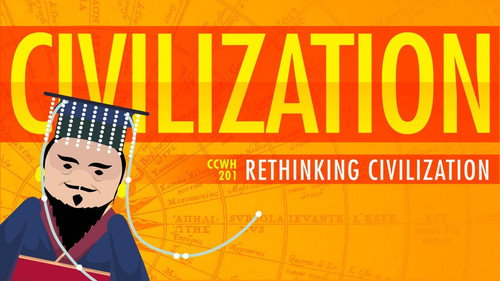
    Crash Course: World History Season 2 Episode 1 - Rethinking Civilization - Crash Course World History 201
    7.7/10(10 votes)

    #1 - Rethinking Civilization - Crash Course World History 201

    S2:E1

    John Green returns to teaching World History! This week, we'll be talking about the idea of civilization, some of the traditional hallmarks of so-called civilization, and why some people would choose to live outside the civilization model. It turns out that not everyone who lives outside of what we traditionally think of as a "civilized" social order is necessarily a barbarian! To defuse any tension you may be feeling, I'll just tell you now that the Mongols are back. You'll learn about Zomia, swidden agriculture, and even a little about anarchy!

    Director:Unknown
    Writer:Unknown

    Be the first to start the conversation for this episode

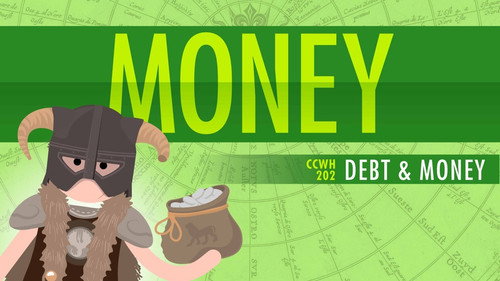
  2. Crash Course: World History Season 2 Episode 2 - Money & Debt: Crash Course World History 202
    8.0/10(10 votes)

    #2 - Money & Debt: Crash Course World History 202

    S2:E2

    John Green teaches about filthy, filthy lucre. Money. And Debt. So, what is money? And what is it for? And why do we use money? And why does it all disappear so quickly after payday? John will look into 75% of these questions, and if he doesn't come up with answers, we'll get into some interesting ideas along the way, at least. This week we'll investigate whether money displaces barter, then leads to war, slavery, and what we think of as civilized social orders. We'll also see what old Adam Smith thinks of big money, no whammies, this week on Crash Course.

    Director:Unknown
    Writer:Unknown

    Be the first to start the conversation for this episode

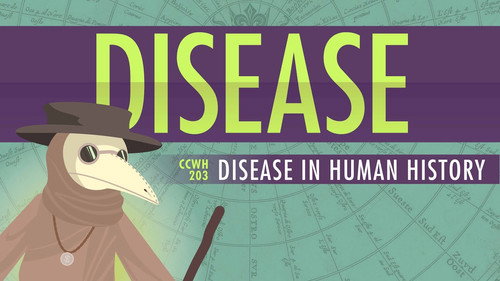
  3. Crash Course: World History Season 2 Episode 3 - Disease! Crash Course World History 203
    8.0/10(11 votes)

    #3 - Disease! Crash Course World History 203

    S2:E3

    John Green teaches you about disease and the effects that disease has had in human history. Disease has been with man since the beginning, and it has shaped the way humans operate in a lot of ways. John will teach you about the Black Death, the Great Dying, and the modern medical revolution that has changed the world.

    Director:Unknown
    Writer:Unknown

    Be the first to start the conversation for this episode

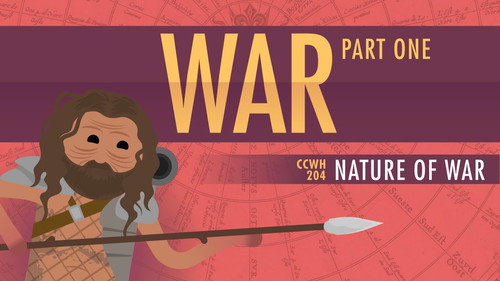
  4. Crash Course: World History Season 2 Episode 4 - War & Human Nature: Crash Course World History 204
    7.7/10(9 votes)

    #4 - War & Human Nature: Crash Course World History 204

    S2:E4

    John Green teaches you about war! Specifically, John talks about whether humanity is naturally warlike, hard-wired to kill, or if perhaps war is a cultural construct. John will talk about the Hobbes versus Rousseau debate, the effects that war has on human social orders, and the effects that war has on individuals. So is war human nature? Watch and find out what we have to say about it.

    Director:Unknown
    Writer:Unknown

    Be the first to start the conversation for this episode

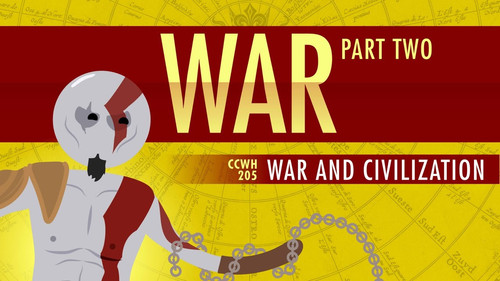
  5. Crash Course: World History Season 2 Episode 5 - War and Civilization: Crash Course World History 205
    7.8/10(8 votes)

    #5 - War and Civilization: Crash Course World History 205

    S2:E5

    John Green investigates war, and what exactly it may or may not be good for. Was war a result of human beings organizing into larger and more complex agricultural social orders, or did war maybe create agriculture and "civilization?" It's hard to know for sure, but it's sure fun to think about.

    Director:Unknown
    Writer:Unknown

    Be the first to start the conversation for this episode

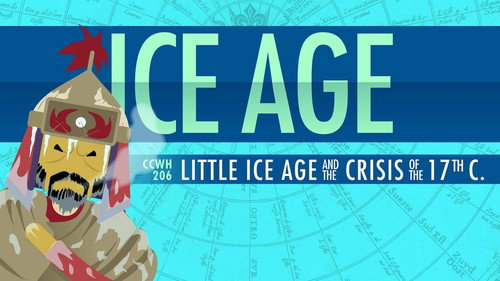
  6. Crash Course: World History Season 2 Episode 6 - Climate Change, Chaos, and The Little Ice Age: Crash Course World History 206
    8.3/10(9 votes)

    #6 - Climate Change, Chaos, and The Little Ice Age: Crash Course World History 206

    S2:E6

    John Green teaches you about the Little Ice Age. The Little Ice Age was a period of global cooling that occurred from the 13th to the 19th centuries. This cooling was likely caused by a number of factors, including unusual solar activity and volcanic eruptions. The Little Ice Age greatly impacted human social orders, especially during the 17th century. When the climate changed, and the weather became unpredictable, the world changed profoundly. Poor harvests led to hunger, which led to even less productivity, which even resulted in violent upheaval in a lot of places. All this from a little change in the temperature? Definitely.

    Director:Unknown
    Writer:Unknown

    Be the first to start the conversation for this episode

  7. Trending NowTRENDING NOW

    The 20 BEST Episodes of Crash Course: World History

    READ
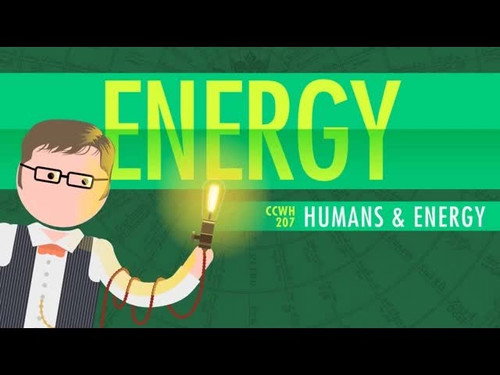
  8. Crash Course: World History Season 2 Episode 7 - Humans and Energy: Crash Course World History 207
    7.8/10(8 votes)

    #7 - Humans and Energy: Crash Course World History 207

    S2:E7

    Stan Muller subs for John Green and teaches you about energy and humanity. Today we discuss the ideas put forth by Alfred Crosby in his book, Children of the Sun. Historically, almost all of the energy that humans use has been directly or indirectly generated by the sun, whether that be food energy from plants, wind energy, direct solar energy, or fossil fuels. Stan looks into these different sources and talks about how humanity will continue to use energy in the future as populations grow and energy resources become more scarce.

    Director:Unknown
    Writer:Unknown

    Be the first to start the conversation for this episode

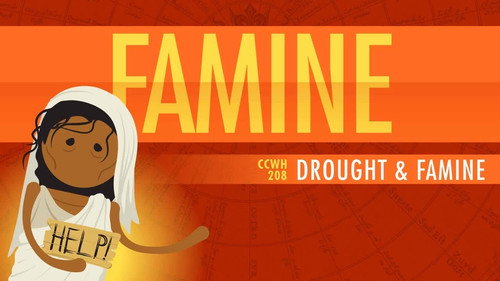
  9. Crash Course: World History Season 2 Episode 8 - Drought and Famine: Crash Course World History 208
    8.0/10(8 votes)

    #8 - Drought and Famine: Crash Course World History 208

    S2:E8

    John Green teaches you a little bit about drought, which is a natural weather phenomenon, and famine, which is almost always the result of human activity. Throughout human history, when food shortages strike humanity, there was food around. There was just a failure to connect those people with the food that would keep them alive. There are a lot of reasons that food distribution breaks down, and John is going to teach you about them in the context of the late-19th century famines that struck British India.

    Director:Unknown
    Writer:Unknown

    Be the first to start the conversation for this episode

  10. Crash Course: World History Season 2 Episode 9 - How World War I Started: Crash Course World History 209
    8.2/10(8 votes)

    #9 - How World War I Started: Crash Course World History 209

    S2:E9

    John Green teaches you about World War I and how it got started. Crash Course doesn't usually talk much about dates, but the way that things unfolded in July and August of 1914 is kind of important to understanding the Great War. You'll learn about Franz Ferdinand, Gavrilo Princip, the Black Hand, and why the Serbian nationalists wanted to kill the poor Archduke. You'll also learn who mobilized first and who exactly started the war. Sort of. Actually, there's no good answer to who started the war, but we give it a shot anyway.

    Director:Unknown
    Writer:Unknown

    Be the first to start the conversation for this episode

  11. Crash Course: World History Season 2 Episode 10 - Who Started World War I: Crash Course World History 210
    8.0/10(8 votes)

    #10 - Who Started World War I: Crash Course World History 210

    S2:E10

    John Green teaches you WHY World War I started. Or tries to anyway. With this kind of thing, it's kind of hard to assign blame to any one of the nations involved. Did the fault lie with Austria-Hungary? Germany? Russia? Julius Caesar? One thing we can say for sure is that you can't blame the United States of America for this one. Woohoo! Well, you can hardly blame the US.

    Director:Unknown
    Writer:Unknown

    Be the first to start the conversation for this episode

  12. Crash Course: World History Season 2 Episode 11 - The End of Civilization (In the Bronze Age): Crash Course World History 211
    7.8/10(8 votes)

    #11 - The End of Civilization (In the Bronze Age): Crash Course World History 211

    S2:E11

    John Green teaches you about the Bronze Age civilization in what we today call the middle east, and how the vast, interconnected civilization that encompassed Egypt, The Levant, and Mesopotamia came to an end. What's that you say? There was no such civilization? Your word against ours. John will argue that through a complex network of trade and alliances, there was a loosely confederated and relatively continuous civilization in the region. Why it all fell apart was a mystery. Was it the invasion of the Sea People? An earthquake storm? Or just a general collapse, to which complex systems are prone? We'll look into a few of these possibilities. As usual with Crash Course, we may not come up with a definitive answer, but it sure is a lot of fun to think about.

    Director:Unknown
    Writer:Unknown

    Be the first to start the conversation for this episode

  13. Crash Course: World History Season 2 Episode 12 - The Rise of the West and Historical Methodology: Crash Course World History 212
    7.8/10(8 votes)

    #12 - The Rise of the West and Historical Methodology: Crash Course World History 212

    S2:E12

    John Green talks about the methods of writing history by looking at some of the ways that history has been written about the rise of the West. But first, he has to tell you what the West is. And then he has to explain the Rise of the West. And then he gets down to talking about the different ways that historians and other academics have explained how the West became dominant in the world. He'll look at explanations from Acemoglu and Robinson's "Why Nations Fail," Francis Fukuyama's "The Origins of Political Order," and Ian Morris's "Why the West Rules, for Now."

    Director:Unknown
    Writer:Unknown

    Be the first to start the conversation for this episode

  14. Crash Course: World History Season 2 Episode 13 - Asian Responses to Imperialism: Crash Course World History 213
    7.7/10(9 votes)

    #13 - Asian Responses to Imperialism: Crash Course World History 213

    S2:E13

    John Green teaches you about Imperialism, but not from the perspective of the colonizers. This week John looks at some Asian perspectives on Imperialism; specifically, writers from countries that were colonized by European powers. We'll look at the writings of Sayyid Jamal ad-Din al-Afghani from the Middle East, Liang Qichao from China, and Rabindranath Tagore from India. these voices from the countries that were colonized give us a sense of how conquered people saw their conquerors, and give an insight into what these nations learned from being dominated by Europe. It's pretty interesting, OK? A lot of this episode is drawn from a fascinating book by Pankaj Mishra called The Ruins of Empire: The Revolt Against the West and the Remaking of Asia. You should read it.

    Director:Unknown
    Writer:Unknown

    Be the first to start the conversation for this episode

  15. Crash Course: World History Season 2 Episode 14 - The Railroad Journey and the Industrial Revolution: Crash Course World History 214
    8.2/10(8 votes)

    #14 - The Railroad Journey and the Industrial Revolution: Crash Course World History 214

    S2:E14

    John Green teaches you about railroads and some of the ways they changed the world, and how they were a sort of microcosm for the Industrial Revolution as a whole. Prior to the invention of steam-powered railroads, pretty much all locomotion had been muscle-powered. You either walked where you wanted to go or rode on an animal to get where you were going. The railroad changed human perception of time and space, making long-distance travel much faster and easier. Railroads also changed habits, including increasing reading. People needed some sort of distraction to ensure they didn't have to talk to other people on the train. Like any new technology, railroads also scared people. All kinds of fears surrounded rail travel, but over time, people got over them. And the quality of boiler manufacturing improved, so the trains exploded less often, which also made people feel safer.

    Director:Unknown
    Writer:Unknown

    Be the first to start the conversation for this episode

  16. Crash Course: World History Season 2 Episode 15 - Population, Sustainability, and Malthus: Crash Course World History 215
    0.0/10(0 votes)

    #15 - Population, Sustainability, and Malthus: Crash Course World History 215

    S2:E15

    John Green teaches you about population. So, how many people can reasonably live on the Earth? Thomas Malthus got it totally wrong in the 19th century, but for some reason, he keeps coming up when we talk about population. In 1800, the human population of the Earth passed 1 billion, and Thomas Malthus posited that growth had hit its ceiling, and the population would level off and stop growing. He was totally right. Just kidding, he was totally wrong! There are like 7 billion people on the planet now! John will teach a little about how Malthus made his calculations, and explain how Malthus came up with the wrong answer. As is often the case, it has to do with making projections based on faulty assumptions. Man, people do that a lot.

    Director:Unknown
    Writer:Unknown

    Be the first to start the conversation for this episode

  17. Crash Course: World History Season 2 Episode 16 - Islam and Politics: Crash Course World History 216
    7.2/10(8 votes)

    #16 - Islam and Politics: Crash Course World History 216

    S2:E16

    John Green teaches you about how Islam has interacted with politics during its history, and how it continues to do so today. Islamist movements are in the news a lot lately, but how did that happen. John will point out that Islam has always been tied to political movements. Mohammed was not only a religious leader, he led an empire. So how did this lead to modern movements like ISIS? Islam has traditionally been a pretty egalitarian religion, and its scriptures value peace, so it is surprising in a lot of ways that such a violent fundamentalist movement would come out of it. What is a caliphate? What is a Caliph? John will teach you all about it. Take it easy in the comments, y'all. Be kind and respectful to each other.

    Director:Unknown
    Writer:Unknown

    Be the first to start the conversation for this episode

  18. Crash Course: World History Season 2 Episode 17 - The Mughal Empire and Historical Reputation: Crash Course World History 217
    7.6/10(8 votes)

    #17 - The Mughal Empire and Historical Reputation: Crash Course World History 217

    S2:E17

    John Green teaches you about the Mughal Empire, which ruled large swaths of the Indian Sub-Continent from 1526 to (technically) 1857. While John teaches you about this long-lived Muslim empire, he'll also look at the idea of historical reputation and how we view people from history. Namely, he'll look at the reputations of Mughal emperors Akbar I and Aurangzeb. Traditionally, Akbar I is considered the emperor that made the Mughal Empire great, and Aurangzeb gets the blame for running the whole thing into the ground and setting it up for decline. Is that really how it was, though? It turns out, it's complicated.

    Director:Unknown
    Writer:Unknown

    Be the first to start the conversation for this episode

  19. Crash Course: World History Season 2 Episode 18 - Luther and the Protestant Reformation: Crash Course World History 218
    6.4/10(8 votes)

    #18 - Luther and the Protestant Reformation: Crash Course World History 218

    S2:E18

    John Green teaches you about the Protestant Reformation. Prior to the Protestant Reformation, pretty much everyone in Europe was a Roman Catholic. Not to get all "great man," but Martin Luther changed all that. Martin Luther didn't like the corruption he saw in the church, especially the sale of indulgences, so he left the church and started his own. And it caught on! And it really did kind of change the world. The changes increased literacy and education, and some even say the Protestant Reformation was the beginning of Capitalism in Europe.

    Director:Unknown
    Writer:Unknown

    Be the first to start the conversation for this episode

  20. Crash Course: World History Season 2 Episode 19 - Charles V and the Holy Roman Empire: Crash Course World History 219
    0.0/10(0 votes)

    #19 - Charles V and the Holy Roman Empire: Crash Course World History 219

    S2:E19

    John Green teaches you about the Holy Roman Empire by teaching you about Charles V. Charles Hapsburg was the Holy Roman Emperor, but he was also the King of Spain. And the King of Germany. And the King of Italy and the Lord of the Netherlands and Count Palatine of Burgundy. In short, Charles was runnin' thangs in much of the world during his reign. Charles ruled a lot of countries, and he was also known for encouraging intellectual discourse and even spoke out against slavery, in a limited way. So why did he consider himself a failure, and why did he break up the Empire when he abdicated in 1556? Mainly because the Holy Roman Empire didn't work very well. It was huge, and it didn't have any means of directly raising taxes. Plus, it was a pretty crazy time in Europe anyway, and Charles found himself in charge of the Catholic-Church-Endorsed Empire during the time of Martin Luther and the Protestant Reformation.

    Director:Unknown
    Writer:Unknown

    Be the first to start the conversation for this episode

  21. Crash Course: World History Season 2 Episode 20 - World War II, A War for Resources: Crash Course World History 220
    9.0/10(8 votes)

    #20 - World War II, A War for Resources: Crash Course World History 220

    S2:E20

    John Green teaches you about World War II, and some of the causes behind the war. In a lot of ways, WWII was about resources, especially food. The expansionist aggression of both Germany and Japan was in a lot of ways about resources. There were other reasons, to be sure, but the idea that the Axis needed more food can't be ignored.

    Director:Unknown
    Writer:Unknown

    Be the first to start the conversation for this episode

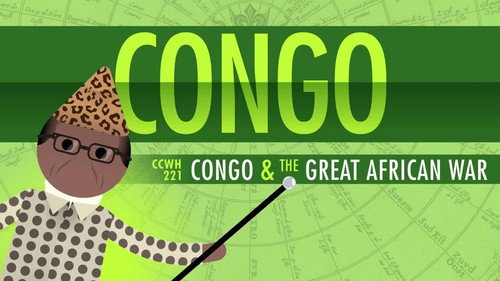
  22. Crash Course: World History Season 2 Episode 21 - Congo and Africa's World War: Crash Course World History 221
    7.7/10(10 votes)

    #21 - Congo and Africa's World War: Crash Course World History 221

    S2:E21

    John Green teaches you about the Democratic Republic of the Congo, which used to be Zaire, which used to be The Belgian Congo, which used to be the Congo Free State, which used to be the region surrounding the Congo River Basin in central Africa. So the history of this place is a little convoluted. The history of Congo is central to the history of central Africa, and the Congo Wars embroiled neighboring countries like Uganda and Rwanda. John will talk you through the history of Congo and the region.

    Director:Unknown
    Writer:Unknown

    Be the first to start the conversation for this episode

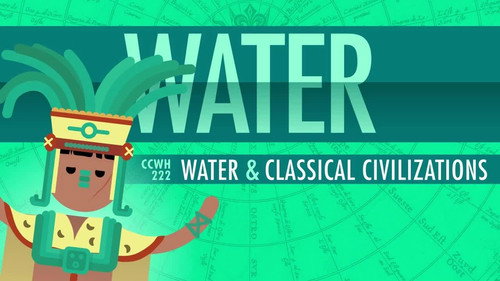
  23. Crash Course: World History Season 2 Episode 22 - Water and Classical Civilizations: Crash Course World History 222
    8.0/10(8 votes)

    #22 - Water and Classical Civilizations: Crash Course World History 222

    S2:E22

    John Green teaches you about water! So, we talk about resources a lot on Crash Course, and today is no exception. It turns out people can't live without water, which means it's absolutely necessary for civilization. Today John talks about water in the context of classical civilizations, but not like Greece or Rome or something. We're talking about the Maya civilization in Central America, and the Khmer civilization in what is now Cambodia. So this is an awesome video, OK?

    Director:Unknown
    Writer:Unknown

    Be the first to start the conversation for this episode

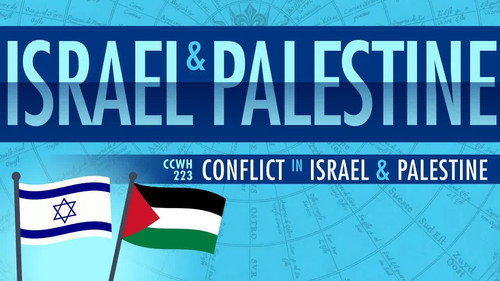
  24. Crash Course: World History Season 2 Episode 23 - Conflict in Israel and Palestine through 2015: Crash Course World History 223
    7.6/10(12 votes)

    #23 - Conflict in Israel and Palestine through 2015: Crash Course World History 223

    S2:E23

    John Green teaches you about the conflict in Israel and Palestine. This conflict is often cast as a long-term beef going back thousands of years, rooted in a clash between religions. Well, that's not quite true. What is true is that the conflict is immensely complicated, and just about everyone in the world has an opinion about it. John is going to try to get the facts across in under 13 minutes.

    Director:Unknown
    Writer:Unknown

    Be the first to start the conversation for this episode

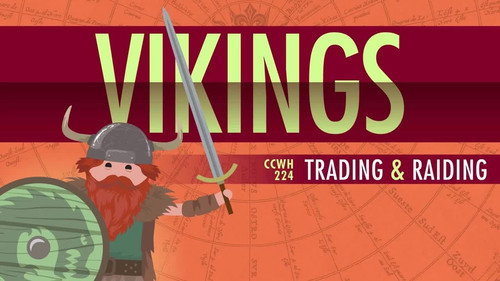
  25. Crash Course: World History Season 2 Episode 24 - The Vikings! — Crash Course World History 224
    7.4/10(10 votes)

    #24 - The Vikings! — Crash Course World History 224

    S2:E24

    John Green teaches you about Vikings! That's right, one of our most requested subjects, the Vikings, right here on Crash Course. So what's the deal with Vikings? Well, the stuff you've heard about them may not be true. The Vikings weren't just pagan raiders striking terror into the hearts of defenseless European Christendom. They were some of the greatest travelers of their time, and they weren't always traveling to steal. In a lot of cases, they were traveling to trade. John will teach you about Viking trade goods, Norse Mythology, and yes, there will be blood, guts, and dragons. OK?

    Director:Unknown
    Writer:Unknown

    Be the first to start the conversation for this episode

  26. Crash Course: World History Season 2 Episode 25 - War and Nation Building in Latin America: Crash Course World History 225
    7.8/10(8 votes)

    #25 - War and Nation Building in Latin America: Crash Course World History 225

    S2:E25

    John Green teaches you about nation-building and nationalism in Latin America. Sometimes, the nations of Latin America get compared to the nations of Europe and are found wanting. This is kind of a silly comparison. The rise of democratic, economically powerful nations in Europe came about under a very different set of circumstances than the way nations arose in Latin America, so the regions are necessarily a lot different. But why? John will explore whether it was a lack of international war which impeded Latin America's growth, which sounds like a crazy thing to say, but you should hear him out.

    Director:Unknown
    Writer:Unknown

    Be the first to start the conversation for this episode

Season 2 Ratings Summary

"Rethinking Civilization - Crash Course World History 201" is the best rated episode of "Crash Course: World History" season 2. It scored 7.7/10 based on 10 votes. Directed by Unknown and written by Unknown, it aired on 7/11/2014. This episode is rated 0.3 points higher than the second-best, "Money & Debt: Crash Course World History 202".